

 Anabelle
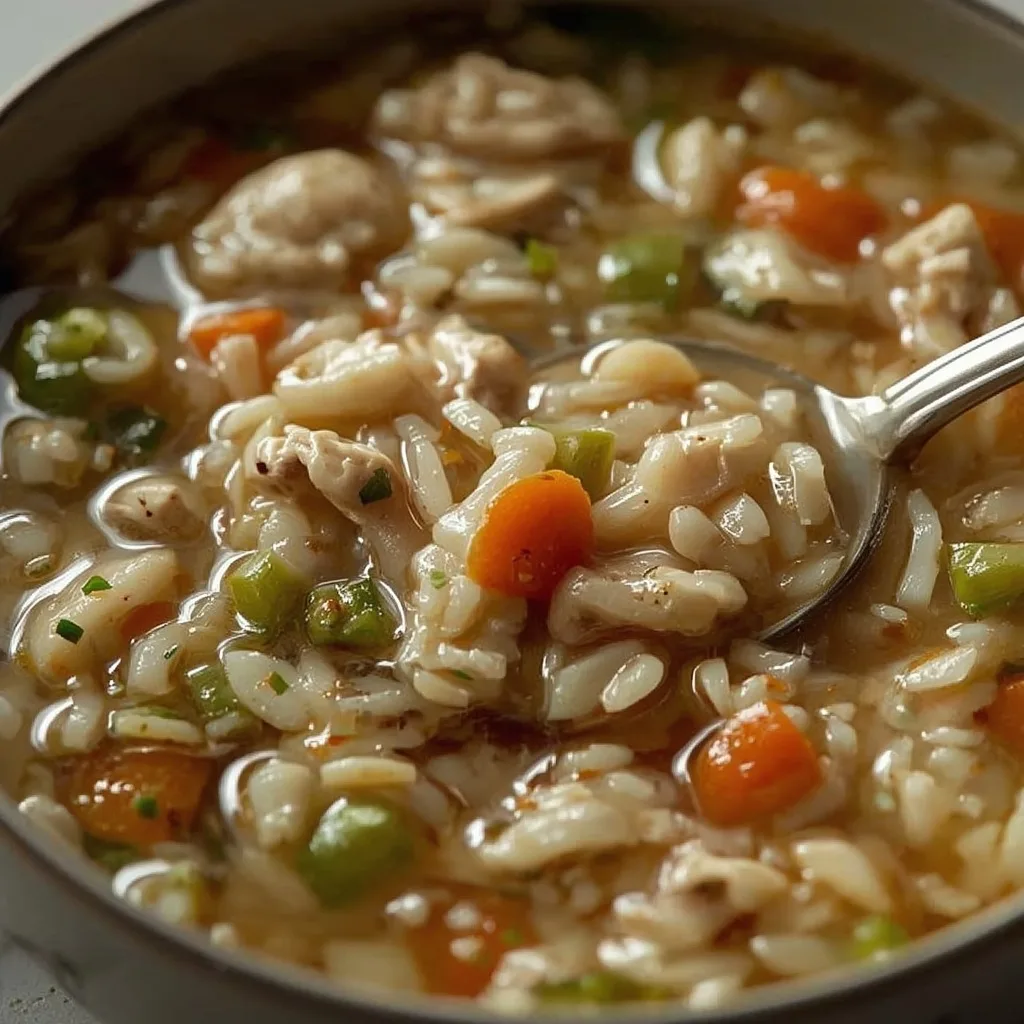
 Pioneer Woman Chicken and Rice Soup is the kind of meal that fills the whole kitchen with that deep, savory aroma you crave on a cold evening. Tender chicken, soft carrots, and fluffy long-grain rice all simmer together in a rich broth that feels both rustic and refined. This stovetop soup comes together in about 75 minutes and sits firmly at beginner level, though the white wine deglazing step adds a touch of finesse worth learning.
The full cooking time breaks down to 20 minutes of prep and 55 minutes on the stove, making it a perfect Sunday dinner or a cozy weeknight project. There is one moment that needs your attention — poaching the chicken just until it hits tenderness without letting it dry out. Get that right and everything else falls into place.
A Quick Glimpse at Pioneer Woman Chicken and Rice Soup
This is a hearty American main-course soup built on a classic mirepoix of onion, carrot, and celery, then deepened with dry white wine and low-sodium chicken broth. The chicken breasts poach gently right in the liquid, which keeps them moist and infuses the broth with flavor. Once shredded and returned to the pot, the rice finishes cooking in that same savory liquid, soaking up every bit of goodness. It is the kind of bowl that warms you from the inside out, perfect for chilly days when you want something substantial but not heavy.
Why This Recipe is Worth Trying
Here is what won me over the first time I made it.
- Deep flavor layers — The white wine deglazing step lifts browned bits off the pot bottom, adding a savory complexity you simply cannot get from broth alone.
- One-pot convenience — Everything cooks in a single Dutch oven, which means less cleanup and more flavor concentration as the liquid reduces.
- Tender, never dry chicken — Poaching the breasts gently in simmering broth keeps them juicy, unlike boiling which tends to toughen the meat.
- Customizable texture — You can shred the chicken into fine pieces or dice it into chunky cubes, depending on how rustic you want each bowl to feel.
Essential Ingredients for This Recipe
The ingredient list is straightforward, but each item pulls its weight in building that layered broth. Here is what you need and why it matters.
The Aromatic Base
- 1 medium yellow onion, finely diced (about 1 cup) — This provides the sweet, savory backbone of the soup. Yellow onions hold up well to longer simmering without turning bitter, though a white onion works in a pinch.
- 2 medium carrots, peeled and diced into 1/4-inch pieces (about 1 cup) — Carrots add natural sweetness and that classic orange pop of color. Keep the dice small and even so they soften at the same rate as the celery.
- 2 celery ribs, diced into 1/4-inch pieces (about 1 cup) — Celery brings a mild earthiness that rounds out the mirepoix. Do not skip it — the flavor is subtle but noticeable if absent.
The Flavor Builders
- 2 tablespoons unsalted butter — Butter gives the soup a silky mouthfeel and helps carry the aromatics. Unsalted lets you control the final salt level.
- 1 tablespoon olive oil — The oil raises the smoke point of the butter, so you can sauté the vegetables without browning them too fast. A good quality extra-virgin olive oil works fine here.
- 2 cloves garlic, minced — Garlic adds that punchy, aromatic note that makes the broth smell incredible. Mince it fresh — pre-minced jarred garlic has a flat flavor.
- 1/2 cup dry white wine (such as Pinot Grigio or Sauvignon Blanc) — This is the secret to the depth. The wine deglazes the pot and adds acidity that brightens the whole dish. Use something you would actually drink, not a cooking wine.
The Broth and Protein
- 8 cups low-sodium chicken broth — This is the liquid foundation. Low-sodium is key because the broth reduces and concentrates, so you want control over the salt. Homemade stock also works beautifully.
- 1 bay leaf — Bay leaf adds a subtle herbal note that deepens as it simmers. Remember to fish it out before serving — nobody wants to bite into a whole leaf.
- 1/4 teaspoon dried thyme — Thyme brings a gentle earthiness that complements the chicken and vegetables. Dried works well here; if using fresh, double the amount.
- 1 1/2 pounds boneless, skinless chicken breasts (about 2 large) — The protein that makes this soup a meal. Poaching keeps it tender, and shredding distributes it evenly through every spoonful.
The Rice and Finishing Touches
- 1 cup long-grain white rice (such as jasmine or basmati), rinsed — Rinsing removes excess starch, which keeps the rice fluffy instead of gummy. Jasmine adds a subtle fragrance, while basmati stays especially separate.
- 2 tablespoons fresh parsley, chopped, for garnish — Parsley adds a fresh, bright finish that cuts through the richness. Stir half in and sprinkle the rest on top.
- 1 tablespoon fresh lemon juice (about 1/2 lemon), optional — Do not skip this. The lemon juice brightens the entire broth and balances the savory depth — it is the difference between good soup and great soup.
Useful Equipment
You do not need a fancy kitchen for this one, but a few specific tools make the process smoother.
- A large Dutch oven or heavy-bottomed pot — This is non-negotiable. The heavy base distributes heat evenly and prevents scorching, which matters during the long simmer. A 5-to-6-quart size works perfectly.
- A wooden spoon — You need this for deglazing. The flat edge scrapes up those browned bits without scratching your pot, which is exactly what you want.
- An instant-read thermometer — This takes the guesswork out of poaching the chicken. You are aiming for 165°F / 74°C in the thickest part.
- Tongs — These help you lift the hot chicken out of the broth cleanly without breaking it apart. A slotted spoon also works, but tongs give you more control.
- Two forks — For shredding the chicken once it has rested. This is the fastest method and gives you those nice, ragged pieces.
Directions to Make Pioneer Woman Chicken and Rice Soup
The process moves through four clear phases: building the aromatic base, deglazing with wine, poaching the chicken, and finishing with rice. Here is the full walkthrough.
- Soften the mirepoix — Heat the butter and olive oil over medium heat until the butter foams. Add the onion, carrots, and celery with the salt and pepper, then cook for 8-10 minutes until the vegetables soften and the onions turn translucent. The salt draws out moisture and prevents burning.
- Bloom the garlic — Stir in the minced garlic and cook for exactly 1 minute, stirring constantly, until fragrant. If it browns too quickly, drop the heat — burnt garlic turns bitter and ruins the broth.
- Deglaze with wine — Pour in the white wine and scrape the bottom of the pot with your wooden spoon to lift the browned fond. Let it bubble and reduce by half, about 2-3 minutes, until the liquid is mostly evaporated and smells deeply savory.
- Build the broth — Add the chicken broth, bay leaf, and thyme. Bring it to a rolling boil over high heat, then reduce to medium-low to maintain a gentle simmer — small bubbles breaking the surface, not a vigorous boil.
- Poach the chicken — Lower the chicken breasts into the simmering broth, ensuring they are fully submerged. Let them poach gently, uncovered, for 18-20 minutes until they register 165°F / 74°C. The meat should feel firm but still yield slightly to the touch.
- Rest and shred — Remove the chicken with tongs and let it rest on a cutting board for 5 minutes. Shred with two forks into bite-sized pieces, or dice into 1/2-inch cubes if you prefer chunkier pieces. Cover with foil to keep warm.
- Cook the rice — Add the rinsed rice to the simmering broth, stirring once to distribute. Cook at a gentle simmer for 15-18 minutes until tender and most of the liquid is absorbed. Stir occasionally to prevent sticking, but avoid vigorous stirring or the rice breaks down and turns starchy.
- Finish and season — Remove the bay leaf and discard. Return the shredded chicken to the pot with the parsley and lemon juice. Taste and adjust with extra salt and pepper — the broth has reduced, so you will likely need a generous pinch more.
- Serve immediately — Ladle into bowls, making sure each portion gets a good amount of chicken and rice. Garnish with extra parsley and a crack of black pepper. The rice keeps absorbing liquid, so this soup is best eaten right away.

What I Got Wrong (And How I Fixed It)
I have made this soup enough times to hit a few snags along the way. These are the pitfalls to watch for.
- Mushy rice — The first time I stirred the rice constantly while it cooked, and it turned into a starchy paste. Fix it by stirring only once after adding the rice, then gently a few times as it simmers.
- Dry, stringy chicken — I once let the chicken boil vigorously instead of simmering gently, and it came out tough. Fix it by keeping the heat at medium-low with just small bubbles breaking the surface.
- Bland broth — Skipping the white wine deglazing step left the soup tasting flat. The wine lifts the browned fond off the pot bottom, and those bits carry a ton of flavor you cannot get any other way.
- Overcooked garlic — I let the garlic brown while sautéing, and it turned bitter, which tainted the whole batch. Fix it by cooking the garlic for just 1 minute, stirring constantly, and dropping the heat if it colors too fast.
- Thick, porridge-like leftovers — The rice absorbs liquid as the soup sits, so reheated leftovers can turn gloppy. Fix it by adding a splash of chicken broth or water when warming it up to loosen it back to soup consistency.
Healthier Ways to Make Pioneer Woman Chicken and Rice Soup
This soup is already fairly wholesome, but a few tweaks can lighten it up without sacrificing flavor.
- Swap brown rice for white — Use 1 cup of brown rice instead, but increase the simmering time to about 30-35 minutes since it takes longer to soften. You get more fiber and a nuttier flavor.
- Reduce the butter — Cut the butter down to 1 tablespoon and use 1 1/2 tablespoons of olive oil instead. You save about 100 calories and 11 grams of fat without losing much richness.
- Add more vegetables — Throw in a cup of chopped zucchini or spinach during the last 5 minutes of cooking. Extra produce boosts the fiber and vitamin content while adding color.
- Use skinless chicken thighs — Swap the breasts for an equal weight of boneless, skinless thighs. They have slightly more fat but stay even more forgiving and moist during poaching.
Ingredient Substitutions for Pioneer Woman Chicken and Rice Soup
Sometimes you are missing an ingredient or two, and that is okay. Here are the swaps that actually work.
- White wine → extra broth — Replace the 1/2 cup of wine with 1/2 cup of additional chicken broth and a teaspoon of white wine vinegar. You lose a bit of depth but gain the same acidity.
- Chicken breasts → boneless thighs — Use an equal 1 1/2 pounds of thighs. They poach just as well and bring a slightly richer flavor, plus they are harder to overcook.
- Yellow onion → leeks — Substitute 1 cup of cleaned, sliced leeks for the onion. Leeks are milder and sweeter, which makes the broth a touch more delicate.
- Long-grain white rice → orzo pasta — Swap the rice for 1 cup of orzo for a different texture entirely. Cook it in the broth for about 9-10 minutes, or until al dente.
- Fresh parsley → fresh dill — Use 2 tablespoons of chopped dill instead. Dill adds a bright, slightly anise-like note that pairs beautifully with chicken and lemon.
Unexpected Ways to Enjoy This Pioneer Woman Chicken and Rice Soup
This soup does not have to stay in the bowl. Here are a few creative ways to stretch it further.
- Baked into a casserole — Combine the finished soup with cooked egg noodles, top with breadcrumbs, and bake at 375°F / 190°C for 20 minutes until bubbling. You get a cozy, one-dish dinner that feeds a crowd.
- Served over mashed potatoes — Ladle the soup over a bed of buttery mashed potatoes. The broth soaks into the potatoes and turns the whole plate into a comfort-food mashup.
- Stuffed into baked potatoes — Split open a baked russet, fluff the inside, and pile the soup on top. Add a sprinkle of cheddar and chives for a loaded baked potato with a twist.
- Reduced into a sauce — Simmer the soup down until the liquid thickens to a sauce-like consistency, then spoon it over roasted chicken or grilled pork chops. The concentrated flavor is incredible.
- Tucked into flaky pastry — Use the thick, drained solids from the soup as a filling for hand pies. Seal them in puff pastry, brush with egg wash, and bake until golden for a portable dinner.
Best Tips for Pioneer Woman Chicken and Rice Soup Success
Over the years, I have learned a few things that make this recipe turn out perfectly every single time.
- Rinse the rice thoroughly — Run cold water over the rice until it runs clear, about 30 seconds. This washes away surface starch that would otherwise make the broth cloudy and the rice gummy.
- Keep the simmer gentle — A rolling boil will toughen the chicken and break down the rice. You want small bubbles breaking the surface, not a vigorous churn.
- Undercook the rice slightly — Pull the pot off the heat when the rice is al dente, with just a tiny bite left. It continues cooking in the hot broth, so it will be perfect by the time you serve.
- Add lemon juice last — Stir in the lemon juice only after everything else is done. If you add it too early, the heat dulls the bright acidity and it loses its punch.
- Season in layers — Salt the mirepoix early, then adjust the broth at the end. The broth reduces and concentrates, so you will likely need a final pinch before serving.
- Let the chicken rest fully — Give the poached breasts a full 5 minutes on the cutting board before shredding. This lets the juices redistribute through the meat, keeping every bite moist.
Tasty Twists on Pioneer Woman Chicken and Rice Soup
Once you master the base recipe, there are endless ways to make it your own. These variations keep things interesting.
- Mediterranean version — Add a teaspoon of dried oregano with the thyme, and stir in a cup of chopped spinach and a handful of kalamata olives at the end. Serve with a drizzle of olive oil.
- Spicy Tex-Mex style — Swap the white wine for an extra 1/2 cup of broth, add a diced jalapeño with the mirepoix, and stir in a teaspoon of cumin. Top with tortilla chips and fresh cilantro.
- Creamy mushroom twist — Sauté 8 ounces of sliced cremini mushrooms with the vegetables, then stir in 1/2 cup of heavy cream at the end. The mushrooms add an earthy depth that pairs beautifully with the rice.
- Lemon herb version — Double the lemon juice to 2 tablespoons and add a teaspoon of fresh chopped thyme in addition to the dried. Serve with a generous shower of fresh dill.
- Asian-inspired variation — Replace the thyme with a teaspoon of grated fresh ginger, swap the wine for 2 tablespoons of soy sauce, and finish with a splash of sesame oil. Top with sliced green onions.
Best Ways to Store Your Pioneer Woman Chicken and Rice Soup
This soup stores well, but the rice complicates things slightly. Here is how to handle leftovers.
- Refrigerator storage — Cool the soup completely, then transfer to an airtight container. It keeps for up to 4 days in the fridge, though the rice will soften and absorb liquid as it sits.
- Freezer without rice — Freeze the soup base without the rice for up to 2 months. When reheating, cook a fresh batch of rice and stir it in, which keeps the texture right.
- Freezer with rice — You can freeze the full soup, but expect the rice to soften significantly and absorb most of the liquid. Thaw overnight in the fridge and loosen with extra broth when reheating.
- Portion containers — Store individual servings in separate containers for easy grab-and-reheat lunches. Mason jars work, but leave an inch of headspace since the liquid expands when frozen.
Ways to Warm It Up Again
Reheating this soup takes a little care so the rice does not turn to mush. Here are the best approaches.
- Stovetop method — Warm the soup over medium-low heat, stirring occasionally, until it reaches a gentle simmer. This takes about 10 minutes, and it is the best way to control the texture.
- Microwave method — Reheat individual portions in a microwave-safe bowl, covered, in 60-second intervals, stirring between each. This takes about 2-3 minutes total, depending on the portion size.
- Loosen with broth — Whichever method you choose, add a splash of chicken broth or water if the soup has thickened. The rice absorbs liquid as it sits, so a little extra moisture brings it back to soup consistency.
Nutritional Breakdown (per serving)
Based on 1 serving = 1 portion out of 4 total, here is what you are working with. The numbers are solid for a hearty main-course soup.
- Calories — 486 per serving, which is substantial enough to be a full meal on its own.
- Protein — 36 grams, thanks to the chicken breasts.
- Fat — about 17 grams total, with roughly 5 grams of saturated fat from the butter.
- Carbohydrates — around 44 grams, mostly from the rice and vegetables.
- Fiber — 3 grams, which comes from the carrots, celery, and onions.
- Sugar — 6 grams, naturally occurring from the vegetables and wine.
- Sodium — close to 1020 milligrams per serving. Using low-sodium broth keeps this in check, so do not swap in regular broth.
Try These Recipes
Wrapping It Up
Pioneer Woman Chicken and Rice Soup is one of those recipes you will find yourself returning to again and again, especially when the weather turns cold. The combination of tender poached chicken, fluffy rice, and that deeply savory broth is hard to beat. Give it a try this week — I think you will be surprised at how much depth a single pot can hold.
PrintPioneer Woman Chicken and Rice Soup

A deeply comforting, rustic chicken and rice soup inspired by the Pioneer Woman’s hearty home-style cooking. Tender chicken, aromatic vegetables, and fluffy rice simmer in a rich, savory broth that clings to every spoonful. This soul-warming soup is perfect for chilly days, offering a satisfying balance of textures and flavors.
- Prep Time: 20
- Cook Time: 55
- Total Time: 75
- Yield: 4 1x
- Category: Main Course
- Method: Stovetop
- Cuisine: American
Ingredients
- 2 tablespoons unsalted butter
- 1 tablespoon olive oil
- 1 medium yellow onion, finely diced (about 1 cup)
- 2 medium carrots, peeled and diced into 1/4-inch pieces (about 1 cup)
- 2 celery ribs, diced into 1/4-inch pieces (about 1 cup)
- 1 teaspoon kosher salt, plus more to taste
- 1/2 teaspoon freshly ground black pepper, plus more to taste
- 2 cloves garlic, minced
- 1/2 cup dry white wine (such as Pinot Grigio or Sauvignon Blanc)
- 8 cups low-sodium chicken broth
- 1 bay leaf
- 1/4 teaspoon dried thyme
- 1 1/2 pounds boneless, skinless chicken breasts (about 2 large)
- 1 cup long-grain white rice (such as jasmine or basmati), rinsed
- 2 tablespoons fresh parsley, chopped, for garnish
- 1 tablespoon fresh lemon juice (about 1/2 lemon), optional
Instructions
- Heat a large Dutch oven or heavy-bottomed pot over medium heat. Add the unsalted butter and olive oil, and swirl until the butter is melted and begins to foam. Add the diced onion, carrots, and celery (the mirepoix), and season with 1 teaspoon kosher salt and 1/2 teaspoon black pepper. Cook, stirring occasionally, for 8-10 minutes, until the vegetables have softened and the onions are translucent, but not browned. The salt helps draw out moisture and prevents burning.
- Add the minced garlic to the pot and cook for 1 minute, stirring constantly, until fragrant. The garlic should sizzle lightly—if it browns too quickly, reduce the heat temporarily. Do not let the garlic burn or it will turn bitter.
- Pour in the dry white wine, scraping the bottom of the pot with a wooden spoon to deglaze and lift any browned bits (the fond). These bits are packed with flavor. Let the wine bubble and reduce by half, about 2-3 minutes, until the liquid is mostly evaporated and the pot smells deeply savory.
- Add the chicken broth, bay leaf, and dried thyme to the pot. Increase the heat to high and bring the mixture to a steady, rolling boil. Once boiling, reduce the heat to medium-low to maintain a gentle simmer—you want small bubbles breaking the surface, not a vigorous boil, to keep the chicken tender.
- Carefully lower the chicken breasts into the simmering broth, ensuring they are fully submerged. Let them poach gently at a bare simmer, uncovered, for 18-20 minutes, until the chicken is cooked through and registers 165°F / 74°C on an instant-read thermometer inserted into the thickest part. The chicken should feel firm but still yield slightly to the touch.
- Remove the cooked chicken from the pot using tongs and transfer to a cutting board. Allow it to rest for 5 minutes, then use two forks to shred the meat into bite-sized pieces. Alternatively, dice it into 1/2-inch cubes if you prefer chunkier pieces. Cover with foil to keep warm while you cook the rice.
- While the chicken rests, add the rinsed rice to the simmering broth. Stir once to distribute, then let it cook at a gentle simmer (medium-low to medium heat) for 15-18 minutes, or until the rice is tender and has absorbed most of the liquid. Stir occasionally to prevent sticking, but avoid vigorous stirring, which can break the rice and make the soup starchy.
- When the rice is cooked (it should be al dente, not mushy), remove the bay leaf and discard. Return the shredded chicken to the pot, and stir in the chopped parsley and the lemon juice, if using. The lemon juice brightens the flavors and balances the richness—do not skip it if you want a truly restaurant-quality finish.
- Taste the soup and adjust seasoning with additional salt and pepper if needed. Remember that the broth will have reduced and concentrated, so you may need a generous pinch more salt. Simmer for an additional 2-3 minutes to ensure everything is heated through.
- Ladle the hot soup into individual bowls, making sure each portion has a good amount of chicken and rice. Garnish with extra chopped parsley and a crack of black pepper. Serve immediately, as the rice will continue to absorb liquid and the soup will thicken upon standing.
Notes
Storage: Cool the soup completely, then transfer to an airtight container. Refrigerate for up to 4 days. Freezing: The soup can be frozen for up to 2 months, but note that the rice will soften and absorb liquid, altering the texture. For best results, freeze the soup without the rice and add freshly cooked rice when reheating. Reheating: Warm on the stovetop over medium-low heat, stirring occasionally, until heated through (about 165°F / 74°C). If the soup has thickened, add a splash of chicken broth or water to loosen it to your desired consistency. Microwave: Reheat individual portions in a microwave-safe bowl, covered, in 60-second intervals, stirring between, until piping hot.
Nutrition
- Calories: 486
- Sugar: 6g
- Sodium: 1020mg
- Unsaturated Fat: 6g
- Carbohydrates: 44g
- Fiber: 3g
- Protein: 36g
- Cholesterol: 105mg
Keywords: chicken and rice soup, Pioneer Woman soup, chicken soup, rice soup, comfort food, hearty soup, stovetop soup, one-pot meal, weeknight dinner, chicken broth soup, vegetable rice soup, homestyle soup