
 Anabelle
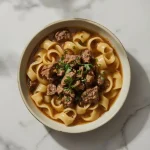
 Pioneer Woman Beef Ragu is a rich, slow-simmered Italian-American sauce built around tender chuck roast in a deep, savory tomato base. The long cooking time breaks the beef down into silky strands that melt into a thick, meaty sauce perfect for pappardelle or polenta.
This stovetop recipe takes about 20 minutes of prep and 3 hours of gentle simmering—I’d call it intermediate difficulty, mostly because patience matters more than skill. Sunday supper is the ideal occasion, though a quiet weekday when you’re home anyway works just as well.
A Quick Glimpse at Pioneer Woman Beef Ragu
In plain terms, this dish is beef chuck chunks seared hard, then simmered low and slow with onion, carrot, celery, red wine, and crushed tomatoes until fork-tender. The sauce turns glossy and deeply flavored, with strands of beef that cling to wide noodles. It’s the kind of meal that fills the house with that unmistakable aroma of garlic, herbs, and wine reducing—best saved for when you have nowhere to be.

Why This Recipe is Worth Trying
Here is why I keep coming back to this one.
- Deep flavor payoff — The searing step builds a brown crust on the beef, and deglazing the pot with red wine captures every bit of that caramelized goodness.
- One pot does it all — You brown, simmer, and finish in the same Dutch oven, which means less cleanup and more flavor concentrated in one place.
- Budget-friendly cut — Chuck roast costs a fraction of what tender cuts run, yet comes out silky and rich after the long braise.
- Make-ahead friendly — The sauce actually improves after a day in the fridge, so it’s smart to cook it ahead for busy evenings.
Essential Ingredients for This Recipe
Everything here is straightforward grocery fare, and each ingredient earns its place.
The Meat and Aromatics
- Beef chuck roast (1 lb, cut into 2-inch chunks) — This well-marbled cut breaks down into tender shreds over the long simmer; look for good fat distribution.
- Yellow onion (1 medium, finely diced) — Adds sweetness and body; a sweet onion works fine if that’s what you have.
- Carrot (1 medium, finely diced) — Brings a subtle earthy sweetness that balances the acidity of the tomatoes.
- Celery (1 stalk, finely diced) — The classic aromatic backbone that deepens the savory profile.
- Garlic (3 cloves, minced) — Stirred in right after the soffritto so it perfumes the oil without burning.
The Liquid and Seasonings
- Olive oil (2 tbsp, divided) — For searing and sautéing; use a good extra virgin for the vegetables.
- Dry red wine (1/2 cup, such as Chianti or Sangiovese) — The alcohol cooks off, leaving concentrated fruitiness; pour something you’d actually drink.
- Crushed tomatoes (1 can, 28 oz) — The base of the sauce; look for San Marzano if you want extra sweetness.
- Beef broth (1 cup, low-sodium) — Adds savory depth without oversalting.
- Rosemary (1 sprig) and thyme (2 sprigs) — Fresh herbs steep in the sauce and get removed before serving.
- Bay leaf (1) — A background note of warmth that you’ll miss if it’s absent.
- Dried oregano (1/2 tsp) — A nod to Italian-American tradition.
The Finish and Serving
- Kosher salt and black pepper — Season the beef before searing and adjust at the end.
- Unsalted butter (1 tbsp, optional) — Stirred in at the end for extra silkiness; skip if you prefer.
- Pappardelle or tagliatelle (1 lb) — Wide noodles that catch the meaty sauce beautifully.
- Parmesan cheese, freshly grated — The finishing salt and umami kick.
Useful Equipment
You probably have most of these already. Here is what I reach for.
- Dutch oven (5-6 quart) — Heavy-bottomed and deep, it holds heat evenly for the long simmer; a heavy pot with a lid works too.
- Wooden spoon — Sturdy enough to scrape up the browned bits during deglazing.
- Tongs — For turning the beef while searing and lifting it out after the braise.
- Two forks — The simplest tool for shredding that fork-tender chuck.
- Large pot for pasta — Generously sized so the pappardelle has room to cook evenly.
Directions to Make Pioneer Woman Beef Ragu
This recipe flows smoothly if you follow the timing, so here is the full walkthrough.
- Prep and sear — Pat the beef dry, season with salt and pepper, then sear half the chunks in 1 tbsp olive oil over medium-high heat until a deep golden crust forms, about 3-4 minutes per side. Work in batches to avoid steaming; rest the cooked chunks on a plate while you handle the rest.
- Soften the aromatics — Drop the heat to medium, add the remaining oil, then cook the onion, carrot, and celery for 6-8 minutes until the onion turns translucent and the bits from searing loosen up.
- Bloom the garlic and paste — Stir in garlic and tomato paste for one minute until fragrant; the paste darkening means its raw edge is gone.
- Deglaze with wine — Pour in the red wine and scrape the bottom thoroughly, simmering 3-4 minutes until it reduces by half and the alcohol smell fades.
- Build the sauce — Add crushed tomatoes, broth, rosemary, thyme, bay leaf, and oregano, then return the beef with any juices.
- Simmer low and slow — Bring to a gentle simmer, then cover and cook on low for 2.5 to 3 hours, stirring every 30 minutes so nothing sticks.
- Shred the beef — When fork-tender, transfer the chunks out, shred with two forks once cool enough, and discard any big fat pieces.
- Finish and serve — Remove the herb sprigs and bay leaf, return the beef to the sauce, stir in butter if using, then toss with freshly cooked pappardelle and reserved pasta water to loosen.

What I Got Wrong (And How I Fixed It)
I made some mistakes the first few times. Here is what tripped me up.
- Overcrowding the pot — Searing all the beef at once lowered the temperature and steamed the meat instead of browning it. Sear in a single layer and let the crust develop before turning.
- Rushing the wine reduction — Adding everything right after the wine meant a sharp, boozy edge in the sauce. Simmer it 3-4 minutes until properly reduced and the aroma turns sweet.
- Simmering too vigorously — A rolling boil made the sauce splatter and the beef turn tough. The surface should barely break with an occasional bubble—lower the heat if it gets lively.
- Skipping the stirring — I thought the low heat meant hands-off, but the sauce scorched on the bottom. Give it a stir every 30 minutes without fail.
- Underseasoning the end — The sauce tasted flat until I remembered the beef broth was low-sodium. Taste and adjust with more salt and pepper after shredding.
Healthier Ways to Make Pioneer Woman Beef Ragu
These tweaks trim things down without gutting the flavor.
- Swap the pasta — Whole wheat pappardelle or zucchini ribbons cut the refined carbs while carrying the sauce just as well.
- Skip the butter — That optional tablespoon adds richness, but the sauce is already silky; leaving it out saves saturated fat.
- Leaner cut — Trim the chuck thoroughly before browning, or use bottom round, to reduce the fat content.
- Skim the surface — After simmering, spoon off the excess oil floating on top before shredding the beef.
- Go light on the cheese — A dusting of Parmesan instead of a generous pile keeps sodium in check.
Ingredient Substitutions for Pioneer Woman Beef Ragu
Running short on something? These swaps usually save the day.
- Chuck roast → short ribs — Richer and more decadent; skip the butter since the fat will render into the sauce.
- Red wine → extra beef broth — Add a splash of balsamic vinegar for acidity if you’re out of wine.
- Crushed tomatoes → whole peeled tomatoes — Crush them by hand before adding; you’ll get a chunkier texture.
- Fresh rosemary and thyme → 1/2 tsp each dried — Add early and use slightly less, as dried herbs are more concentrated.
- Pappardelle → fettuccine or rigatoni — Any sturdy shape works; just adjust the cooking time to package directions.
- Beef broth → chicken broth — Slightly lighter flavor, but it keeps everything moist and savory.
Unexpected Ways to Enjoy This Pioneer Woman Beef Ragu
Once the sauce is made, the possibilities open up well beyond pasta.
- Over creamy polenta — Spoon the ragu over soft, buttery polenta for a hearty bowl that soaks up every drop.
- Stuffed into baked potatoes — Pile the saucy beef onto split russets with a dollop of sour cream.
- On top of garlic bread — Thick slices, toasted, then ladled with warm ragu make a messy but glorious open-faced sandwich.
- Inside lasagna — Use this ragu in place of the meat layer; the flavor will be deeper than any standard filling.
- As a filling for hand pies — Reduce the sauce until thick, spoon into puff pastry squares, and bake until golden.
- Over roasted squash — Spoon it onto halved acorn or butternut squash for a fall-inspired dinner.
Best Tips for Pioneer Woman Beef Ragu Success
These small moves make the difference between good and memorable.
- Dry the beef well — Patting off moisture before seasoning ensures a proper sear; wet meat just steams.
- Brown in batches — Leave space between the meat chunks so they caramelize rather than steam.
- Scrape the bottom — Every stir during the vegetable step lifts the browned bits that carry all the flavor.
- Keep the lid on — Trapping the steam lets the meat cook evenly, so avoid lifting it frequently during the simmer.
- Reserve pasta water — That starchy liquid loosens the sauce beautifully and helps it cling to the noodles.
Tasty Twists on Pioneer Woman Beef Ragu
Once you’ve mastered the base, try playing with these variations.
- Spicy version — Add 1/2 teaspoon of red pepper flakes with the garlic for a gentle heat that warms the whole bowl.
- Mushroom beef ragu — Sauté 8 oz of sliced cremini mushrooms with the aromatics for extra earthy depth.
- Herb-forward finish — Stir in chopped fresh parsley and a little lemon zest right before serving for brightness.
- Chianti-short rib remake — Swap the beef for bone-in short ribs and braise an hour longer for a more luxurious texture.
- Smoky undertone — Toast a pinch of smoked paprika in the hot oil before adding the aromatics; it adds a subtle campfire note.
Best Ways to Store Your Pioneer Woman Beef Ragu
Leftovers are a gift if you store them right.
- Refrigerator (up to 4 days) — Cool the sauce completely, then transfer to an airtight container before chilling.
- Freezer (up to 3 months) — Use a freezer-safe container with 1/2-inch headroom for expansion; thaw in the fridge overnight.
- Separate the pasta — Never freeze the noodles in the sauce—they’ll turn mushy on reheating.
- Label with a date — Write the date on the container so you know what you’re working with later.
Ways to Warm It Up Again
Reheating gently is key so the beef stays tender and the sauce keeps its body.
- Stovetop (best method) — Warm over medium-low heat in a saucepan, adding a splash of beef broth or water to loosen as needed.
- Microwave — Heat in 30-second bursts at 50% power, stirring between each, to avoid hot spots and rubbery beef.
- Oven — Spread in an oven-safe dish, cover with foil, and warm at 325°F for 15-20 minutes until heated through.
Nutritional Breakdown (per serving)
Based on one portion out of the 4 total servings this recipe makes, here is what you’re looking at.
- Calories — 720 per serving
- Protein — 42g
- Fat — 28g
- Carbohydrates — about 58g
- Fiber — around 6g
- Sugar — 12g
- Sodium — about 720mg
Try These Recipes
Wrapping It Up
Pioneer Woman Beef Ragu rewards the slow path with a sauce that tastes like it simmered all day—because it did, and that’s exactly the point. The beef shreds into silky strands, the wine and tomatoes deepen into something rich, and the whole pot comes together for a Sunday-worthy dinner.
Give it a try on a lazy afternoon and let the kitchen fill with that slow-cooked aroma. You’ll be glad you did.
PrintPioneer Woman Beef Ragu

This beef ragu is a rich, slow-simmered Italian-American sauce featuring tender chuck roast in a deep, savory tomato base. The long, gentle cooking breaks down the beef until it shreds into silky strands, creating a luxuriously thick, meaty sauce perfect for tossing with pappardelle or spooning over creamy polenta.
- Prep Time: 20
- Cook Time: 180
- Total Time: 200
- Yield: 4 1x
- Category: Main Course
- Method: Stovetop
- Cuisine: Italian
Ingredients
- 2 tbsp olive oil, divided
- 1 lb beef chuck roast, cut into 2-inch chunks
- 1 tsp kosher salt, plus more to taste
- 1/2 tsp freshly ground black pepper
- 1 medium yellow onion, finely diced (about 1 cup)
- 1 medium carrot, peeled and finely diced (about 1/2 cup)
- 1 celery stalk, finely diced (about 1/2 cup)
- 3 cloves garlic, minced (about 1 tbsp)
- 2 tbsp tomato paste
- 1/2 cup dry red wine (such as Chianti or Sangiovese)
- 1 (28-oz) can crushed tomatoes
- 1 cup low-sodium beef broth
- 1 sprig fresh rosemary
- 2 sprigs fresh thyme
- 1 bay leaf
- 1/2 tsp dried oregano
- 1 tbsp unsalted butter (optional, for silkiness)
- Freshly grated Parmesan cheese, for serving
- 1 lb pappardelle or tagliatelle pasta
Instructions
- Pat the beef chuck chunks dry with paper towels, then season on all sides with kosher salt and freshly ground black pepper. Allowing the meat to come to room temperature for 20-30 minutes before browning helps it sear evenly.
- In a large Dutch oven or heavy-bottomed pot (5-6 quart), heat 1 tablespoon olive oil over medium-high heat until it shimmers. Add half the beef chunks in a single layer, ensuring not to overcrowd the pot—this allows for proper browning. Sear for 3-4 minutes per side, until a deep golden-brown crust forms. Transfer the seared meat to a plate and repeat with the remaining meat and another 1/2 tablespoon oil if needed. The browned bits left in the pot are full of flavor.
- Reduce the heat to medium. Add the remaining 1 tablespoon olive oil to the pot, then add the onion, carrot, and celery. Cook, stirring frequently, for 6-8 minutes, until the vegetables soften and the onion becomes translucent. Scrape up any browned bits from the bottom of the pot as you stir—this prevents burning and incorporates flavor.
- Add the minced garlic and tomato paste, stirring constantly for 1 minute until fragrant and the paste darkens slightly. This step removes the raw taste of the tomato paste and deepens the overall umami.
- Pour in the red wine, and use a wooden spoon to scrape the bottom of the pot thoroughly, dissolving the caramelized bits (deglazing). Simmer for 3-4 minutes until the wine has reduced by half and the alcohol smell has mostly evaporated, leaving only its concentrated fruitiness.
- Add the crushed tomatoes, beef broth, rosemary sprig, thyme sprigs, bay leaf, and dried oregano. Return the seared beef and any accumulated juices to the pot. Bring the sauce to a gentle simmer over medium heat, then reduce the heat to low, so only an occasional bubble breaks the surface.
- Cover the pot and let the ragu simmer gently for 2.5 to 3 hours, stirring from time to time (about every 30 minutes) to prevent sticking. The sauce should remain at a bare simmer—if it bubbles too vigorously, lower the heat. You’ll know it is done when the beef is fork-tender and pulls apart easily.
- After 3 hours, remove from heat. Using tongs, transfer the beef chunks to a cutting board. Set the pot aside. Once cool enough to handle, shred the meat into bite-sized pieces using two forks, discarding any large fat pieces or gristle.
- Remove the rosemary and thyme sprigs, and bay leaf from the sauce, pressing them against the side of the pot to extract as much flavor as possible. Skim off any excess fat oil from the surface if desired.
- Return the shredded beef to the sauce. If you want a richer, silkier texture, stir in the butter until incorporated. Taste and adjust seasoning with additional salt and pepper if needed. Keep warm over very low heat, uncovered, while you cook the pasta.
- Bring a large pot of generously salted water to a rolling boil (about 1 tbsp salt per 4 quarts water). Cook the pappardelle according to package directions, or until just al dente, usually 8-10 minutes. Reserve 1 cup of pasta water before draining.
- Transfer the drained pasta directly into the pot with the ragu—or pour the ragu over the pasta in the serving bowl. Toss to coat, adding splashes of reserved pasta water as needed to loosen the sauce to a silky consistency that clings to the noodles.
- Serve immediately in shallow bowls, topped with freshly grated Parmesan cheese. A sprinkle of fresh chopped parsley would add color and freshness if desired.
Notes
Storage: The ragu (without pasta) will keep in an airtight container in the refrigerator for up to 4 days. Freeze the ragù for up to 3 months in a freezer-safe container, leaving 1/2-inch headroom for expansion. Thaw overnight in the fridge before reheating. Reheat gently in a saucepan over medium-low heat, adding a splash of beef broth or water to loosen if needed. For the pasta, it’s best to cook fresh or reheat the sauce alone and toss with freshly cooked noodles.
Nutrition
- Calories: 720
- Sugar: 12g
- Sodium: 720mg
- Unsaturated Fat: 10g
- Carbohydrates: 58g
- Fiber: 6g
- Protein: 42g
- Cholesterol: 120mg
Keywords: beef ragu, ragu recipe, slow cooked beef sauce, Italian meat sauce, chuck roast recipe, pappardelle sauce, hearty pasta sauce, one pot sauce, weeknight dinner, comfort food