 Anabelle
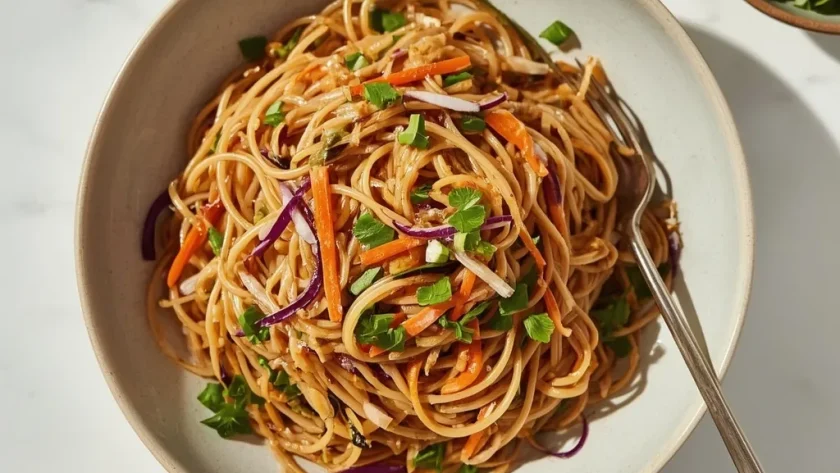
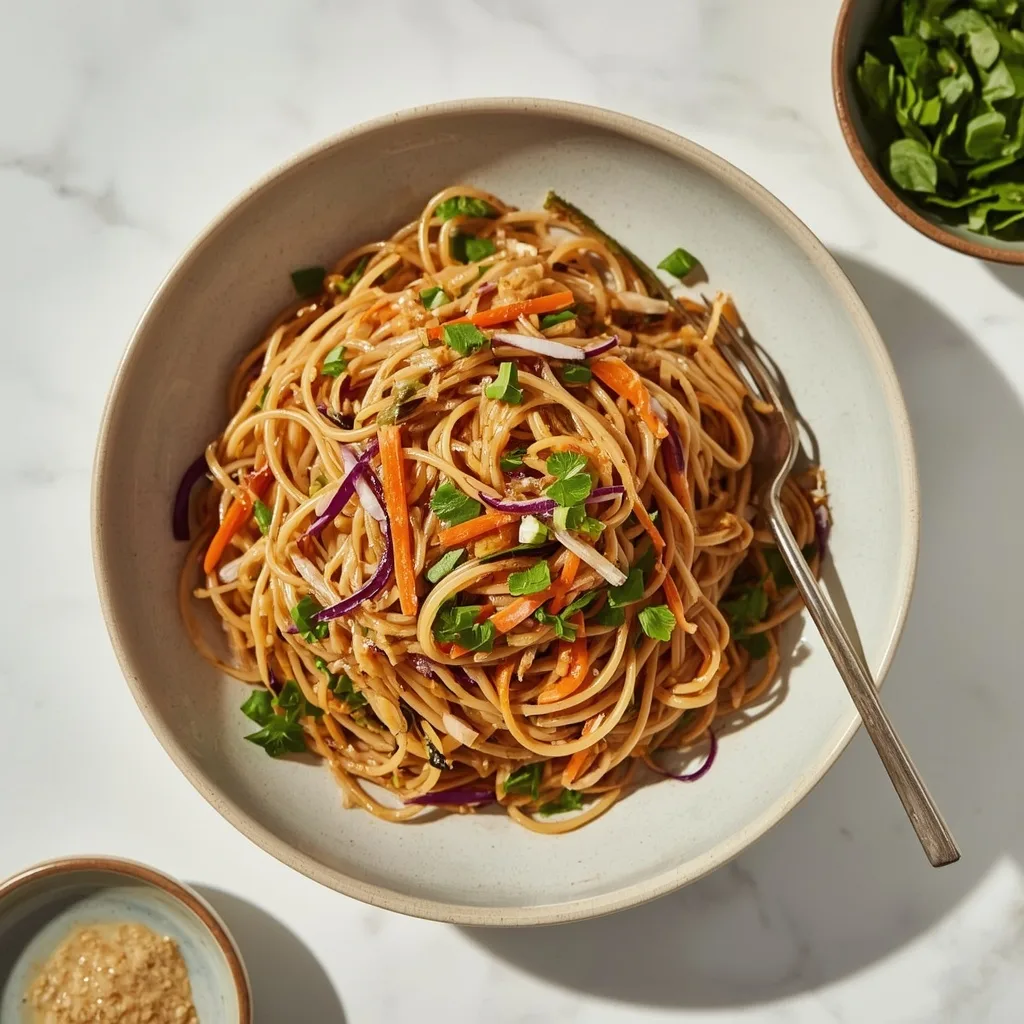
 Crisp, colorful, and tossed in a boldly savory ginger-sesame dressing, this Pioneer Woman Asian Noodle Salad is the kind of cold noodle dish that makes weekday lunches feel like an event. It combines tender spaghetti with crunchy cabbage, carrots, and bell peppers, all brought together with a nutty, slightly spicy kick that keeps you coming back for another forkful.
You can have it on the table in about 32 minutes from start to finish, and it is rated beginner level — no fancy techniques required. It is perfect for potlucks, meal prep, or a light summer dinner when you want something refreshing but satisfying, though the only mildly tricky part is emulsifying the dressing so it clings to every strand.
A Quick Glimpse at Pioneer Woman Asian Noodle Salad
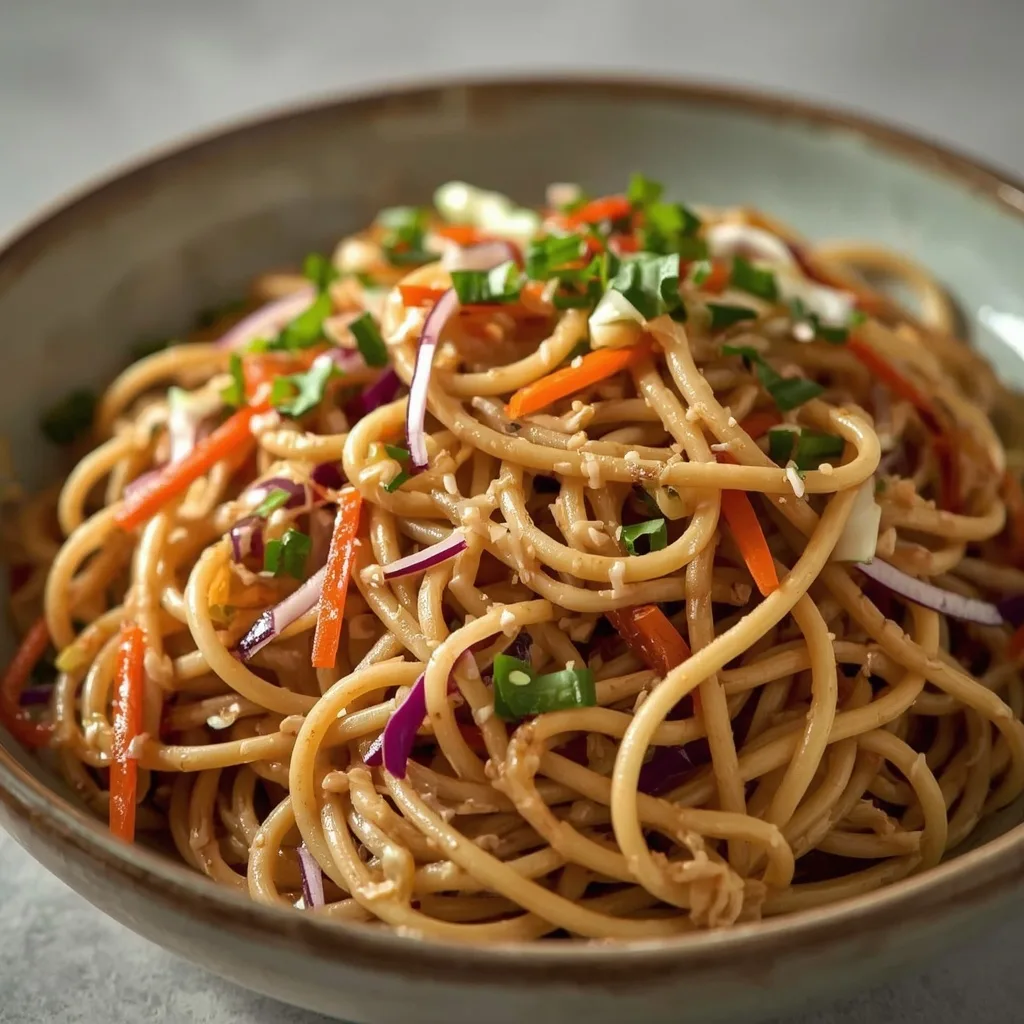
This is a cold pasta salad built on spaghetti, which might surprise you at first, but the noodles hold the dressing beautifully. The vegetables — shredded cabbage, carrots, red bell pepper, edamame, and scallions — give it a satisfying crunch in every bite. The dressing is where the magic lives: soy sauce, rice vinegar, toasted sesame oil, honey, fresh ginger, garlic, and a touch of Sriracha whisked together with neutral oil for a glossy, clingy finish. It tastes bright, nutty, and gently spicy, with a texture that is equal parts chewy noodles and crisp vegetables. This dish is ideal for warm weather gatherings or as a make-ahead lunch that actually gets better after a short rest.
Why This Recipe is Worth Trying
Here is what sold me the first time I made it:
- Effortless assembly — You boil pasta, chop a few vegetables, and whisk a dressing; there is no complicated cooking involved, just straightforward steps that come together quickly.
- Bold flavor payoff — The toasted sesame oil and fresh ginger deliver a rich, aromatic punch that tastes like it took far more effort than it actually did.
- Crowd-pleasing versatility — It works as a side dish, a main lunch, or a potluck contribution, and it appeals to both kids and adults thanks to its mild heat and familiar spaghetti base.
- Make-ahead friendly — The salad holds up well in the fridge for up to three days, making it a practical option for weekly meal prep.
Essential Ingredients for This Recipe
You will need a mix of pantry staples and fresh produce to get the balance just right. Here is everything that goes into the bowl.
Produce and Fresh Components
- 2 cups (140g) shredded green cabbage — This adds the essential crunch and bulk; about a quarter of a small head is what you need, and a bagged coleslaw mix works in a pinch.
- 1 cup (110g) shredded carrots — Roughly two medium carrots, which bring a subtle sweetness and vibrant orange color to the mix.
- 1/2 red bell pepper, thinly sliced into 2-inch strips — About two-thirds of a cup, this gives a fresh, slightly sweet crunch that pairs well with the tangy dressing.
- 1/2 cup (50g) shelled edamame, cooked and cooled — They add a pop of green and a boost of plant-based protein that makes the salad more filling.
- 1/4 cup (30g) thinly sliced scallions — Use both white and green parts for a mild onion bite that brightens the whole dish.
- 1/4 cup (10g) fresh cilantro leaves, roughly chopped — The herbal freshness cuts through the rich sesame and soy flavors beautifully.
Pantry and Dressing Essentials
- 8 oz (227g) dried spaghetti — The base of the salad; regular spaghetti works perfectly, but you could also swap in soba noodles or linguine for a different texture.
- 1/2 teaspoon kosher salt — This goes into the pasta water to season the noodles from within as they cook.
- 2 tablespoons (20g) toasted sesame seeds — Divided, with one tablespoon folded in and the rest sprinkled on top for a nutty, crunchy finish.
- 1/4 cup (60 ml) low-sodium soy sauce — The salty, savory backbone of the dressing; low-sodium is key so it does not overpower everything else.
- 2 tablespoons (30 ml) rice vinegar — Adds a mild, slightly sweet acidity that balances the richness of the oils.
- 1 tablespoon (15 ml) toasted sesame oil — This is the flavor anchor, giving the dressing its signature nutty, aromatic depth.
- 2 teaspoons (10 ml) honey — A touch of sweetness that rounds out the sharp edges of the vinegar and soy.
- 2 teaspoons (12g) freshly grated ginger — Fresh ginger is non-negotiable here; it brings a bright, warming zing that powdered ginger cannot replicate.
- 1 clove garlic, minced — A single clove adds savory depth without overpowering the other flavors.
- 1 teaspoon Sriracha, plus more to taste — For a gentle heat that builds as you eat; adjust it up or down depending on your tolerance.
- 1/4 cup (60 ml) neutral oil — Canola or grapeseed work best, as they emulsify the dressing without adding competing flavors.
Optional but Nice to Have
- Pinch of salt — For adjusting seasoning at the end, though you may not need it given the soy sauce.
- Extra Sriracha — Keep it on hand for anyone who wants more heat at the table.
Useful Equipment
You likely have most of these already, but here is what makes the process smoother:
- Large pot — You need enough water to let the spaghetti cook without sticking; a 6-quart pot is ideal.
- Colander — For draining and rinsing the noodles under cold water to stop the cooking process.
- Small mixing bowl — For whisking the dressing together; a bowl with a narrow base helps the emulsion come together.
- Whisk — Essential for slowly incorporating the neutral oil into the dressing so it emulsifies properly.
- Large mixing bowl — Big enough to hold all the noodles and vegetables with room to toss without spilling.
Directions to Make Pioneer Woman Asian Noodle Salad
The whole process takes about 32 minutes, and most of that is just waiting for pasta water to boil. Here is the step-by-step path to a perfect bowl.
- Boil the pasta — Bring a large pot of water to a rolling boil over high heat, stir in 1/2 teaspoon salt, and add the spaghetti. Cook according to package directions until al dente, usually 8 to 10 minutes, stirring occasionally so the strands do not stick together.
- Cool the noodles — Drain the spaghetti in a colander and rinse under cold running water for 30-60 seconds, stirring with your hands until the pasta is completely cool to the touch. This stops the cooking and prevents clumping, so do not rush it.
- Whisk the dressing base — In a small bowl, combine the soy sauce, rice vinegar, toasted sesame oil, honey, grated ginger, minced garlic, and Sriracha. Whisk until the honey fully dissolves into the liquid.
- Emulsify with neutral oil — Slowly drizzle the neutral oil into the dressing while whisking continuously. This creates a smooth emulsion that coats the noodles evenly instead of pooling at the bottom of the bowl.
- Combine noodles and vegetables — In a large mixing bowl, toss the cooled spaghetti with the cabbage, carrots, bell pepper, edamame, and scallions, using tongs or your hands to distribute everything evenly.
- Toss with dressing — Pour the dressing over the noodle mixture and toss thoroughly for 1-2 minutes, making sure every strand and vegetable piece is coated. The dressing will absorb slightly into the noodles, which is exactly what you want.
- Add cilantro and sesame seeds — Fold in the chopped cilantro and 1 tablespoon of the sesame seeds, tossing once more to incorporate.
- Garnish and adjust — Transfer the salad to a serving platter and sprinkle with the remaining 1 tablespoon of sesame seeds. Taste it, then add more Sriracha for heat or a pinch of salt if needed.
- Rest before serving — Let the salad sit at room temperature for 10 minutes before serving so the flavors can meld together. Serve cold or at room temperature.
What I Got Wrong (And How I Fixed It)
The first few times I made this, a couple of things went sideways. Here is what tripped me up and how to avoid the same pitfalls.
- Skipping the cold rinse — I tried to save time and skipped rinsing the pasta, which left it clumpy and overcooked. Rinsing for the full 30-60 seconds makes a huge difference in texture.
- Adding oil too fast — Pouring the neutral oil in all at once broke the dressing into a greasy mess. Drizzling it in slowly while whisking keeps everything smooth and clingy.
- Overdressing the salad — I dumped the whole batch of dressing in at once and ended up with soggy noodles. Start with the full amount as written, but toss thoroughly so it coats everything evenly rather than pooling.
- Skipping the rest time — Serving it immediately after tossing meant the flavors did not have time to meld. Those 10 minutes at room temperature genuinely improve the taste.
- Using pre-shredded carrots — The bagged ones are too dry and thin, which made the salad less crunchy. Shredding fresh carrots gives you that satisfying bite;
Healthier Ways to Make Pioneer Woman Asian Noodle Salad
There are a few easy tweaks if you want to lighten this up without losing the flavor. Here is what I have tested:
- Swap in whole wheat spaghetti — This adds about 4 grams more fiber per serving and a nuttier flavor that complements the sesame dressing well.
- Reduce the neutral oil — Cutting it down to 3 tablespoons instead of a quarter cup lightens the fat content, though the dressing will be slightly less glossy.
- Use less honey — Dropping to 1 teaspoon instead of 2 reduces sugar by about 2 grams per serving, and you will not miss the sweetness much.
- Add more vegetables — Doubling the cabbage or tossing in some sliced cucumber or snap peas boosts the fiber and volume without adding many calories.
- Choose low-sodium soy sauce — This already helps, but you can also use a reduced-sodium tamari, which cuts the sodium by roughly 30% compared to regular soy sauce.
Ingredient Substitutions for Pioneer Woman Asian Noodle Salad
Out of an ingredient or two? No problem — these swaps work well in a pinch.
- Spaghetti → Soba noodles or linguine — Soba brings a nutty, earthy flavor that pairs beautifully with the sesame, while linguine offers a similar texture with a wider surface for the dressing.
- Green cabbage → Napa cabbage or shredded Brussels sprouts — Napa is more delicate and sweeter, while Brussels sprouts add a dense crunch that holds up well over a day or two.
- Red bell pepper → Orange or yellow bell pepper — Any sweet bell pepper works; the color changes slightly, but the crunch and flavor stay right on point.
- Edamame → Frozen peas or diced cucumber — Peas bring a similar pop of sweetness and green, while cucumber adds extra freshness and crunch for a lighter feel.
- Sriracha → Gochujang or chili flakes — Gochujang adds a deeper, fermented heat, while a pinch of chili flakes gives you a dry, straightforward spice without the extra moisture.
- Cilantro → Fresh mint or Thai basil — Mint adds a cool freshness, while Thai basil brings a hint of anise that works wonderfully with the ginger and sesame.
Unexpected Ways to Enjoy This Pioneer Woman Asian Noodle Salad
This salad does not just have to sit in a bowl. Here are some creative ways to put it to work.
- Wrap it in lettuce cups — Spoon the noodle salad into butter lettuce leaves for a crunchy, low-carb vessel that makes a fun appetizer or light lunch.
- Top it with grilled protein — A few slices of grilled chicken, steak, or tofu on top turn this side dish into a hearty main course in minutes.
- Roll it into spring rolls — Use rice paper wrappers and fill them with the noodle salad for a handheld snack that travels well for picnics or packed lunches.
- Use it as a filling for quesadillas — Pile the salad onto a tortilla with some shredded cheese, fold, and crisp in a pan for a fusion twist that is surprisingly delicious.
- Serve it over greens — A bed of baby spinach or arugula under the noodle salad adds extra freshness and turns it into a more substantial salad bowl.
Best Tips for Pioneer Woman Asian Noodle Salad Success
These are the little things that separate a good version from a great one:
- Grate the ginger fresh — Pre-minced ginger from a jar is watery and weaker; freshly grated ginger gives the dressing a bright, punchy flavor that is worth the extra 30 seconds.
- Rinse the noodles thoroughly — Cold water rinsing is not just about cooling — it washes away excess starch that would make the salad gummy, so give it the full 30-60 seconds.
- Toss for a full minute — Do not rush the tossing step; a solid minute of mixing ensures every strand gets coated and the dressing does not sink to the bottom.
- Let it rest before serving — Those 10 minutes at room temperature are non-negotiable for flavor melding, so resist the urge to serve it immediately.
- Taste before adjusting — The soy sauce is salty, so taste the salad before adding any extra salt; you will likely not need it at all.
- Use toasted sesame seeds — Raw seeds are bland; toasted ones bring a nutty aroma that elevates the whole dish, so seek them out or toast your own in a dry pan.
Tasty Twists on Pioneer Woman Asian Noodle Salad
If you want to switch things up, these variations keep the base but change the personality of the dish.
- Spicy Mango Version — Add 1 cup of diced ripe mango and an extra teaspoon of Sriracha for a sweet-heat combo that is perfect for summer.
- Peanut Crunch Version — Swap the sesame seeds for crushed roasted peanuts and stir 1 tablespoon of peanut butter into the dressing for a richer, nuttier finish.
- Citrus Bright Version — Add the zest and juice of one lime to the dressing and toss in some fresh mint leaves for a zesty, refreshing lift.
- Crunchy Ramen Noodle Version — Crush a pack of dry ramen noodles and toss them in at the end for an extra crispy topping that adds serious texture.
- Cucumber and Avocado Version — Fold in 1 cup of sliced cucumber and one diced avocado right before serving for added creaminess and freshness.
Best Ways to Store Your Pioneer Woman Asian Noodle Salad
Proper storage keeps this salad tasting good for days. Here is how to handle leftovers.
- Airtight container — Store the salad in a sealed container in the refrigerator for up to 3 days, though it is best within 24 hours for maximum crunch.
- Separate dressing — If you are meal prepping, keep the dressing in a small jar and toss it with the noodles and vegetables right before serving to preserve texture.
- Refresh with a splash — Before serving leftovers, add a splash of soy sauce or rice vinegar to bring back the moisture that the noodles absorb over time.
- Avoid freezing — Freezing ruins the fresh vegetables and turns the noodles mushy, so this is one dish that is strictly for the fridge.
Ways to Warm It Up Again
This salad is designed to be served cold or at room temperature, but if you prefer it warm, here is how to do it gently.
- Stovetop method — Heat a skillet over medium heat, add the salad, and stir frequently for 2-3 minutes until just warmed through; do not let it sit too long or the vegetables will lose their crunch.
- Microwave method — Place a portion in a microwave-safe bowl, cover with a damp paper towel, and heat in 30-second bursts at 50% power, stirring between each, until warmed to your liking.
- Hot water bath — Place the container in a bowl of warm water for 5-10 minutes to gently take the chill off without cooking the vegetables further.
Nutritional Breakdown (per serving)
Based on 1 serving = 1 portion out of 4 total servings, here is what you are looking at:
- Calories: 390
- Protein: 9g
- Fat: 18g
- Saturated Fat: 2.5g
- Carbohydrates: 48g
- Fiber: about 4g
- Sugar: about 8g
- Sodium: around 720mg
- Cholesterol: 0mg
Try These Recipes
Wrapping It Up
This Pioneer Woman Asian Noodle Salad is one of those recipes that delivers far more than the effort it asks of you. The combination of crunchy vegetables, tender noodles, and that deeply savory ginger-sesame dressing is genuinely hard to stop eating. Give it a try for your next potluck or meal prep session — I think you will find it becomes a regular in your rotation.
PrintPioneer Woman Asian Noodle Salad
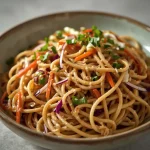
This vibrant, cold noodle salad brings together tender spaghetti tossed with crisp, colorful vegetables and a boldly savory ginger-sesame dressing. The combination of crunchy cabbage, carrots, and bell peppers with a touch of heat from Sriracha and the nutty richness of sesame oil makes every bite a refreshing, satisfying experience.
- Prep Time: 20
- Cook Time: 12
- Total Time: 32
- Yield: 4 1x
- Category: Side Dish
- Method: Stovetop
- Cuisine: Asian Fusion
Ingredients
- 8 oz (227g) dried spaghetti
- 1/2 teaspoon kosher salt, for pasta water
- 2 cups (140g) shredded green cabbage (about 1/4 small head)
- 1 cup (110g) shredded carrots (about 2 medium carrots)
- 1/2 red bell pepper, thinly sliced into 2-inch strips (about 2/3 cup)
- 1/2 cup (50g) shelled edamame, cooked and cooled
- 1/4 cup (30g) thinly sliced scallions (white and green parts)
- 1/4 cup (10g) fresh cilantro leaves, roughly chopped
- 2 tablespoons (20g) toasted sesame seeds
- 1/4 cup (60 ml) low-sodium soy sauce
- 2 tablespoons (30 ml) rice vinegar
- 1 tablespoon (15 ml) toasted sesame oil
- 2 teaspoons (10 ml) honey
- 2 teaspoons (12g) freshly grated ginger
- 1 clove garlic, minced
- 1 teaspoon Sriracha, plus more to taste
- 1/4 cup (60 ml) neutral oil (such as canola or grapeseed)
Instructions
- Bring a large pot of water to a rolling boil over high heat. Stir in 1/2 teaspoon salt and add the spaghetti. Cook according to package directions until al dente, usually 8 to 10 minutes, stirring occasionally to prevent sticking.
- Drain the spaghetti in a colander and rinse under cold running water for 30-60 seconds, stirring with your hands, until the pasta is completely cool to the touch. This stops the cooking and prevents clumping. Drain thoroughly, shaking the colander to remove excess water.
- While the pasta cooks, prepare the dressing. In a small bowl, whisk together the soy sauce, rice vinegar, toasted sesame oil, honey, grated ginger, minced garlic, and Sriracha until the honey is fully dissolved.
- Slowly drizzle the neutral oil into the dressing while whisking continuously. This emulsifies the dressing, helping it coat the noodles evenly instead of pooling at the bottom. Set the dressing aside.
- In a large mixing bowl, combine the cooled spaghetti, shredded cabbage, shredded carrots, sliced bell pepper, edamame, and scallions. Toss gently with tongs or your hands to evenly distribute the vegetables.
- Pour the dressing over the noodle mixture. Toss thoroughly, using tongs for 1-2 minutes, ensuring every strand and vegetable piece is coated. The dressing will absorb slightly into the noodles, which is what you want.
- Add the chopped cilantro and 1 tablespoon of the sesame seeds. Toss once more to incorporate, reserving the remaining sesame seeds for garnish.
- Transfer the salad to a serving platter or bowl. Sprinkle with the remaining 1 tablespoon sesame seeds. Taste and adjust seasoning, adding more Sriracha for heat or a pinch of salt if needed.
- For best flavor, let the salad sit at room temperature for 10 minutes before serving, allowing the flavors to meld. Serve cold or at room temperature.
Notes
Store leftovers in an airtight container in the refrigerator for up to 3 days. The dressing will absorb into the noodles over time, so if desired, refresh with a splash of soy sauce or rice vinegar before serving. This salad is best enjoyed within 24 hours for maximum crunch. Freezing is not recommended due to the fresh vegetables. To serve warm, skip the cold rinse and toss warm noodles with the dressing.
Nutrition
- Calories: 390
- Sugar: 8g
- Sodium: 720mg
- Unsaturated Fat: 2g
- Carbohydrates: 48g
- Fiber: 4g
- Protein: 9g
- Cholesterol: 0mg
Keywords: asian noodle salad, pioneer woman, cold sesame noodles, spaghetti salad, asian pasta salad, ginger sesame dressing, easy side dish, potluck recipe, no-fuss salad, noodle salad with vegetables